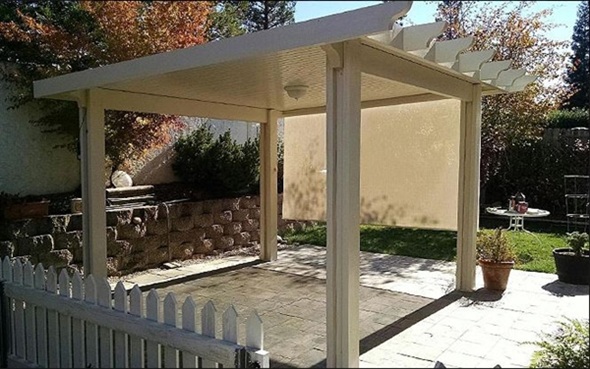
Columns should make a patio cover look like it belongs to the house, not like a separate structure added afterward. For homeowners considering patio covers Davis, CA, the best starting point is a simple checklist: study the home’s roof, trim, materials, scale, and the views the new columns will affect.
This is easiest to address before a design is finalized. Early on, you can choose a column shape and finish that supports the architecture. Once post locations, beams, and rooflines are set, changing a column from slim and square to broad and stone-faced can affect the entire look and structure.
Start with the Home, Not the Patio Cover Catalog
A column can be round, square, smooth, textured, narrow, or substantial. None of those choices is automatically right. The answer depends on what the existing exterior already says.
Look at the front porch, eaves, window trim, garage door details, masonry, and roof shape. Those elements create the visual language of the house. A patio cover should carry that language into the backyard, even when the materials are not identical.
If your home has clean, simple trim and a low-profile roof, heavily ornamented columns may feel disconnected. On the other hand, a larger home with stone accents, deep overhangs, or a prominent entry may need more visual weight than thin posts can provide. Reviewing patio cover ideas outdoor living rooms davis ca can help you identify the overall look you want before narrowing the column details.
Check the Home’s Architectural Lines and Roof Shape
- Low-slope or straightforward rooflines: Simple square columns often fit best because they echo the clean, horizontal lines of the cover and keep the structure from looking overly busy.
- Homes with deep eaves or wide fascia boards: A somewhat broader column or a column with a defined cap can visually support the heavier roof edge above it.
- Traditional porch details: Round columns, tapered forms, or decorative caps may work when the home already has classic trim and layered architectural details.
- Contemporary exteriors: Straight edges, restrained colors, and square profiles usually make more sense than ornate shapes. The goal is intentional simplicity, not a blank or undersized appearance.
- Spanish, Mediterranean, or stucco-focused homes: Smooth, substantial-looking supports often blend better than sharply detailed trim-style columns. Coordinate the finish with surrounding stucco tones and roof accents.
Match Column Proportions to the Patio Cover’s Scale
A well-chosen column can still look wrong if its size or spacing is off. The covered area, beam depth, roof span, and ceiling height all affect how wide and how far apart the supports should be.
- Width: Wider columns generally look more grounded under a deeper beam or a broad solid roof. Very narrow posts under a large roof can make the cover appear top-heavy.
- Height: Tall columns need enough visual thickness to avoid looking spindly. Lower rooflines usually benefit from simpler, less bulky supports so the patio does not feel closed in.
- Spacing: Supports should land where they can carry the design without cutting the patio into awkward sections. Wide openings preserve views and circulation, while closer spacing can suit a smaller cover or a design with more visual rhythm.
- Covered-area size: A small sitting area rarely needs oversized columns. A large outdoor room, however, can look unfinished when it relies on minimal supports that disappear beneath a wide roof.
A useful check is to stand at the most-used door and look outward. If a proposed column dominates the doorway or breaks up the best view, its location deserves another look before installation begins.
Coordinate Materials, Finishes, and Color with Existing Exterior Elements
Columns do not need to match every exterior surface exactly. In fact, trying to match siding, stone, stucco, trim, and gutters all at once usually creates visual clutter. Choose one or two exterior elements to guide the finish.
- Trim and window frames: A column color that relates to trim can create a crisp, coordinated look, especially on homes with simple siding or stucco.
- Stone or brick accents: A masonry-look base or textured finish can work well when the house already has masonry in visible areas. Use it as an accent, not an unrelated material added everywhere.
- Siding and stucco: A complementary tone can make the patio cover feel connected without making the entire rear elevation one flat color.
- Gutters and roof edges: These smaller details matter. A beam-and-column color that clashes with visible gutters or fascia can make an otherwise sound design feel pieced together.
- Surface durability: Aluminum, rock, concrete, and steel options have different appearance and care needs. Discuss the finish you want alongside how much ongoing maintenance you are prepared to handle.
Consider What Each Column Will Frame and Where It Will Sit
Columns are part of how the yard is viewed and used. They can frame a dining area, define a seating zone, create a sense of entry, or block a sightline that should remain open.
- Doors and windows: Avoid placing a column where it visually crowds a main rear door or blocks daylight through a frequently used window.
- Seating and dining areas: A support near the edge of a table zone can help define the space. One placed in the middle of a traffic route becomes an everyday annoyance.
- Landscaping: Coordinate supports with existing trees, planters, and hardscape lines. A column should not force an awkward path around a mature landscape feature.
- Views and privacy: Use post placement to frame a garden, pool, or open yard. If privacy is needed, combine column locations thoughtfully with shade or privacy-screen planning rather than relying on random placement.
Ignoring this step can leave you with a patio that is structurally sound but frustrating to use. A column that blocks a sliding door view, pinches a walkway, or lands where furniture needs to go is difficult to overlook after the project is complete.
Ask About Structural Needs and Maintenance Before Finalizing the Look
The appearance of a column cannot be separated from what it supports. Roof style, span, site conditions, beam configuration, and the material selected all influence the column options that make sense.
Ask a qualified patio cover professional which sizes and locations suit the design, whether your preferred finish can be used in the intended role, and how the materials will hold up over time. It is also smart to ask how beam ends, roof insulation, screens, fans, skylights, or other planned features may change the overall visual balance.
Sacramento Patio by Clark Wagaman Designs offers column options in round and square forms, with aluminum, rock, concrete, and steel choices. Bringing exterior photos and noting the features you want to preserve, such as a view, window line, or existing stonework, gives the design conversation a much stronger starting point.
Use a Final Exterior-Compatibility Checklist Before You Commit
- Architecture: Does the column shape fit the home’s roofline, trim, and overall style?
- Proportion: Does the width look appropriate beneath the beam and roof area it supports?
- Placement: Will supports preserve door access, walking paths, furniture layouts, and important views?
- Finish: Does the material and color relate to key exterior elements without trying to match everything?
- Function: Will the layout work with planned shade, screens, lighting, fans, or other patio features?
- Long-Term Fit: Does the chosen material meet your durability and maintenance expectations?
A patio cover becomes more convincing when every visible part, including its columns, has a clear relationship to the home. For patio covers Davis, CA that feel connected to the exterior from the first design decision, Sacramento Patio by Clark Wagaman Designs can help you weigh the available options during a free consultation and estimate. Call (916) 825-4736 to start the conversation.