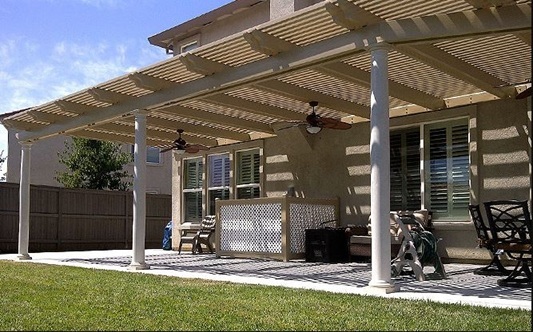
Homes near the foothills come with a tradeoff many homeowners know well. You get incredible views, cooler evenings, and more open outdoor living space, but you also deal with intense afternoon sun, shifting winds, and weather that changes faster than it does in flatter neighborhoods. That is why homeowners searching for patio covers El Dorado Hills, CA are often looking for more than simple shade. They want a patio that actually works year-round.
We see this often with foothill properties where the backyard faces west or sits on a slope. A patio can feel comfortable at 10 a.m. and nearly unusable by late afternoon if the cover was not designed for the way the home interacts with sunlight and wind. The right patio cover is less about appearance alone and more about controlling heat, airflow, and how the outdoor space functions over time.
Many homeowners initially lean toward lattice patio covers because they like the filtered light and open feel. In flatter neighborhoods, they can work well. Near the foothills, though, they often create frustration during peak summer months.
Foothill winds tend to shift direction throughout the day. With lattice systems, sunlight moves aggressively through the openings, creating uneven heat patches across seating areas. We have seen homeowners spend thousands on outdoor furniture only to realize one side of the patio becomes too hot to use after lunch.
There is also a maintenance issue many people do not expect. Wind carries dust and pollen underneath lattice covers far more aggressively than solid systems. Ceiling fans, outdoor TVs, and fabric cushions collect debris quickly, especially during dry months.
A better option for many foothill homes is a hybrid design that combines insulated solid panels with selective openings near the perimeter. That approach keeps airflow moving while dramatically reducing heat concentration.
One of the biggest misconceptions homeowners have is assuming insulated patio covers only help with shade. In reality, they often change how the entire backyard feels.
An insulated roof panel can lower the surface temperature underneath the patio significantly compared to aluminum-only systems. That matters because concrete and pavers hold heat long after the sun drops. Without insulation overhead, patios can radiate stored heat into the evening, making outdoor dining uncomfortable even after sunset.
We recently worked with a homeowner whose backyard overlooked the hills but became unusable every summer evening because the patio trapped heat. They originally thought they needed misting systems or larger fans. The actual problem was radiant heat transfer from an uninsulated patio roof. After upgrading the cover system, the space cooled faster at night and became usable again without adding expensive cooling equipment.
That kind of issue is easy to overlook until you live with it.
A larger patio cover is not always the right solution. Sometimes placement matters more than square footage.
Foothill homes often sit at angles that create unusual sun exposure patterns. A patio facing southwest can receive harsh low-angle sunlight in the late afternoon that slips underneath the cover entirely. Homeowners then assume the patio cover "does not work," even though the issue is really sun angle.
This is where integrated drop shades or extended fascia designs can make a major difference. Blocking low western sun usually improves comfort more than simply extending the roof outward another few feet.
We also encourage homeowners to think about seasonal sun shifts. A patio that feels perfect in May may become difficult by August because the sun path changes noticeably through summer. Designing for only one season creates long-term disappointment.
Most homeowners assume wind resistance simply means stronger posts and heavier materials. Structural integrity is important, but comfort is the bigger issue.
Wind tunneling happens frequently near foothill properties because elevation changes redirect airflow. Some patios become natural wind funnels, especially between neighboring homes or along retaining walls. We have seen beautiful outdoor kitchens become nearly unusable because smoke, heat, and debris constantly circulate through the seating area.
Smart patio cover design can redirect airflow instead of fighting it. Ceiling height adjustments, partial privacy walls, and beam positioning all influence how wind moves through the patio.
One overlooked detail is fan placement. In windy foothill areas, poorly placed outdoor fans can actually create turbulent air patterns that make the patio less comfortable. Positioning matters just as much as fan size.
Many foothill homeowners hesitate to install larger patio covers because they worry about losing their view. That concern is understandable, especially with elevated lots overlooking hillsides or open space.
What homeowners often discover later is that direct glare can make those views harder to enjoy anyway. Strong sunlight reflecting off glass doors, pool water, or light concrete can strain visibility during peak daylight hours.
This is where patio cover height and finish color become surprisingly important. Bright white undersides can create reflected glare that bounces into interior living spaces. Darker matte finishes often improve visual comfort while making the patio feel less harsh during bright afternoons.
Another important factor is beam spacing. Thick support beams placed incorrectly can interrupt sightlines when seated. Small layout adjustments during design can preserve panoramic views much better than homeowners expect.
Homes near the foothills typically experience darker evenings faster because surrounding terrain blocks sunlight earlier in the day. Patio lighting needs to compensate for that transition naturally.
Many older patio covers rely on a single central light fixture, which creates harsh shadows and uneven lighting. Layered lighting works much better. Recessed lighting, perimeter accent lighting, and task lighting near dining or cooking areas create a softer, more usable environment.
This becomes especially important for homeowners who entertain regularly. Poor lighting often makes outdoor spaces feel smaller and less inviting after sunset, even if the patio itself is well-designed.
The best patio covers are not simply decorative additions. They solve specific environmental problems tied to the property itself. Sun exposure, wind direction, evening heat retention, glare, and airflow all matter more near foothill communities than many homeowners realize at first.
That is why homeowners researching patio covers El Dorado Hills, CA benefit from working with professionals who understand how foothill conditions affect long-term comfort, not just appearance. At Sacramento Patio by Clark Wagaman Designs, we help homeowners create outdoor spaces that stay comfortable through changing seasons, shifting sunlight, and foothill weather patterns. If your current patio feels too hot, too windy, or underused, scheduling a design consultation can help uncover what is really limiting the space before investing in the wrong solution.
You can also explore our patio cover services page to compare material options, insulated systems, and custom layouts designed for foothill properties.


